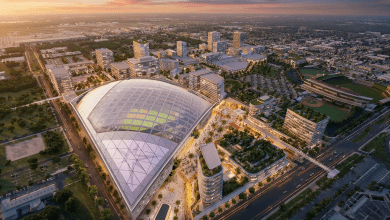
St. Lucie County Data Center Project Stalls After Public Pushback — What It Means for Florida Residents

A proposed 15-million-square-foot data center in Fort Pierce — known as the Sentinel Grove Technology Park — appears to be moving toward withdrawal after significant public concern and new state legislation that would increase oversight of large AI and data center developments.

The project, which would have covered roughly 1,200 acres on Orange Avenue, was positioned to become one of the largest facilities of its kind in the country. However, local response played a major role in slowing momentum.
Community Concerns That Shaped the Outcome
Residents in St. Lucie County raised concerns centered on measurable impacts rather than ideology. Key issues discussed publicly included:
- The overall scale of the project in a primarily agricultural area
- Water consumption requirements associated with hyperscale data centers
- Electrical demand and infrastructure strain
- Traffic flow, lighting, and noise in surrounding communities
Similar conversations unfolded in Palm Beach County regarding another proposal, Project Tango, indicating that these discussions are not isolated to one municipality.
In response to mounting concerns — and anticipated changes at the state level — the developer behind Sentinel Grove signaled a potential withdrawal of the plan.

State-Level Legislation and Local Authority
The development also coincides with proposed legislation in Tallahassee tied to Gov. Ron DeSantis’ broader Artificial Intelligence Bill of Rights framework.
Provisions under Senate Bill 482 would:
- Expand local government authority over data center approvals
- Require utilities to charge data centers full infrastructure costs
- Restrict development on certain agricultural or sensitive lands
- Prevent taxpayer subsidies for such facilities
A related proposal, Senate Bill 484, would increase transparency by limiting nondisclosure agreements tied to these projects.
While these measures are still part of the legislative process, county officials acknowledged that the potential regulatory changes influenced the developer’s decision-making timeline.
Cause and Effect: What This Means for Floridians
The Sentinel Grove pause highlights several practical impacts for Florida residents:
Infrastructure Allocation
Large data centers require significant and continuous water and power access. When projects are delayed or reconsidered, that capacity remains available for residential growth, existing commercial users, and long-term planning.
Utility Rate Structures
Legislation requiring data centers to absorb their full utility costs shifts financial responsibility directly to the operator rather than distributing costs across broader customer bases. This affects how utility pricing structures evolve over time.
Land Use Planning
In counties experiencing rapid growth, decisions about where industrial-scale infrastructure is located can influence agricultural preservation, residential development patterns, and transportation planning.
Economic Development Timing
Data centers represent long-term capital investment. When projects pause, counties may reassess how to balance high-density industrial uses with residential expansion and environmental management.
Broader Context Across Florida
Florida remains a state attracting technology infrastructure, logistics hubs, and corporate relocations. At the same time, local governments are increasingly weighing infrastructure capacity, environmental impact, and community response before approving large-scale projects.
The St. Lucie County situation reflects how public feedback, regulatory timing, and long-term infrastructure planning intersect in fast-growing regions.
Final Perspective
The likely withdrawal of the Sentinel Grove data center does not close the door on technology investment in Florida. Instead, it demonstrates how large infrastructure proposals move through multiple layers of review — local input, state legislation, and resource planning.
For residents, the practical takeaway is that decisions about major developments can directly affect water allocation, energy infrastructure, land use, and long-term utility structures. The St. Lucie case illustrates how those factors are increasingly part of the conversation when projects of this scale are considered.