From TV Retail to E-Commerce Logistics: Former HSN Campus May Become Major Industrial Hub in Tampa Bay

A proposed redevelopment of the former Home Shopping Network (HSN) campus in St. Petersburg may signal more than just another industrial project. It represents a broader shift in how retail works in the modern economy — and how Tampa Bay is adapting to it.
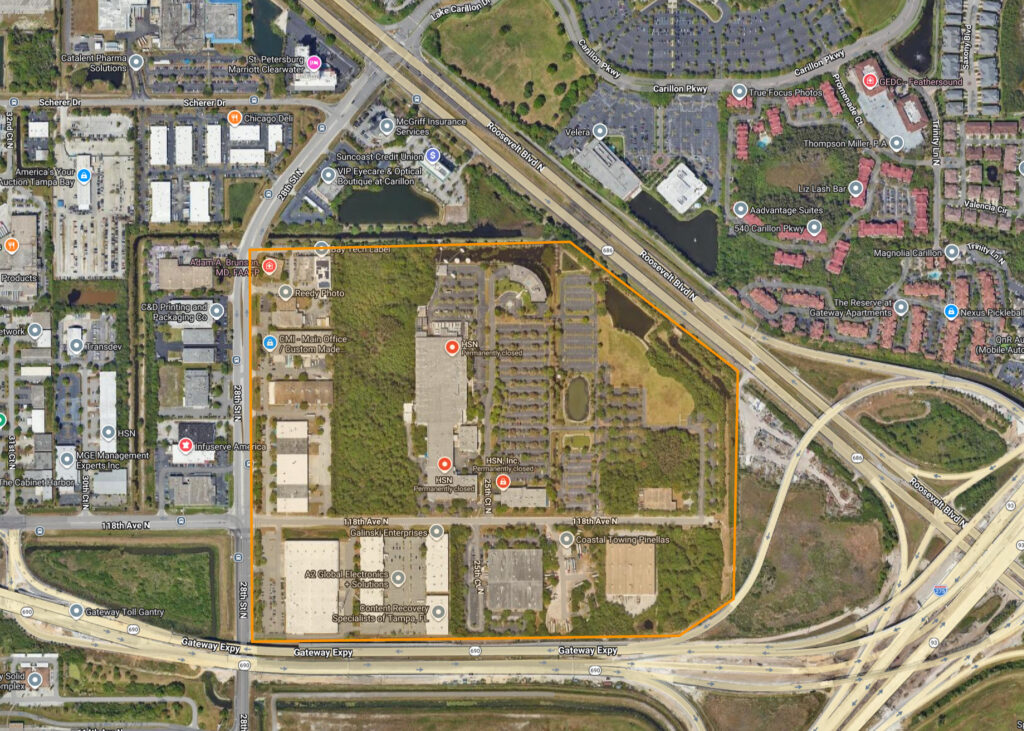
The 65-acre HSN headquarters property in the Gateway district is currently under contract and could be redeveloped into one of the region’s largest industrial projects, bringing more than 400,000 square feet of warehouse and logistics space to Pinellas County.
But the story behind the property goes deeper than a simple redevelopment.
It reflects the evolution of retail itself and Tampa’s growing population.
A Landmark of the Television Shopping Era
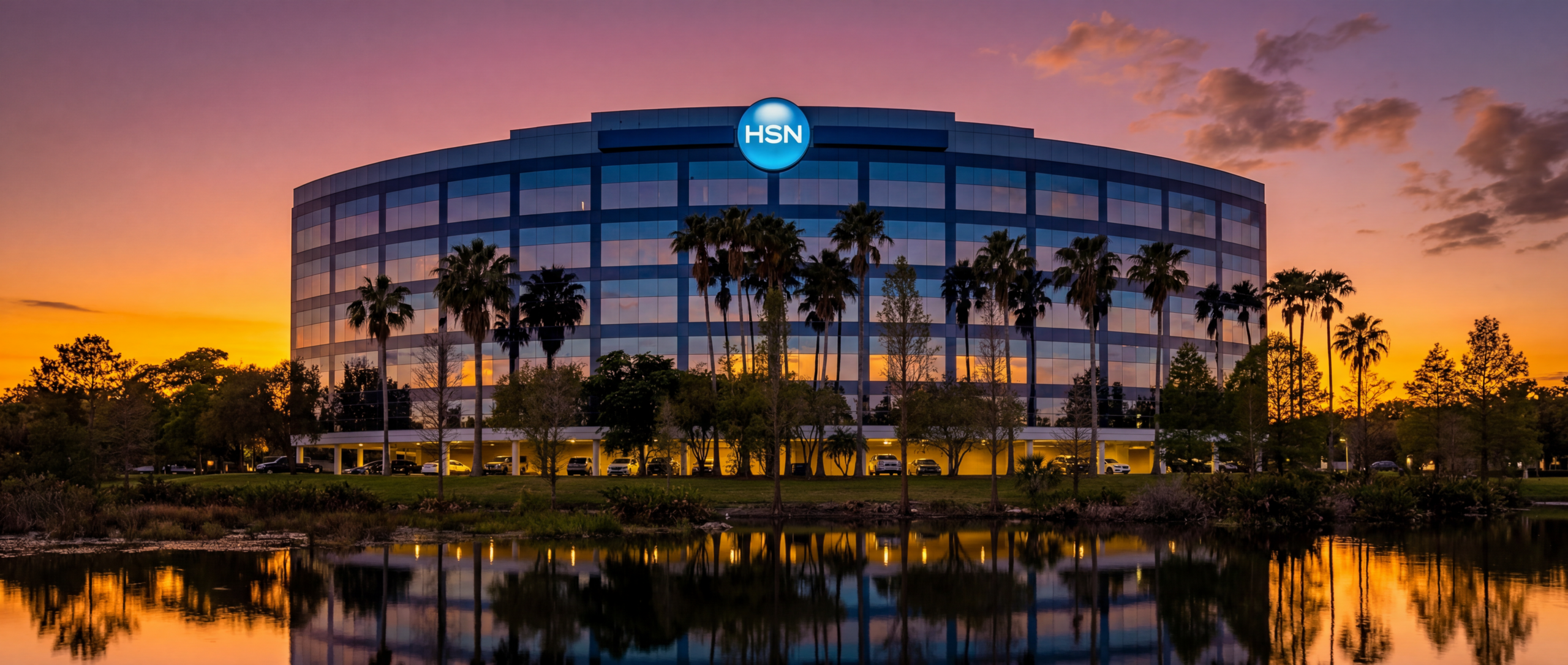
For decades, HSN was one of Tampa Bay’s most recognizable corporate brands. Founded in the region in the late 1970s, the network pioneered the concept of live television shopping — turning late-night product demonstrations into a national retail phenomenon.
Viewers could call a toll-free number and purchase products in real time while hosts demonstrated everything from kitchen gadgets to fashion lines.
The model worked remarkably well during the early years of cable television. HSN grew into a major retail platform, broadcasting live programming around the clock and reaching millions of households across the United States.
The St. Petersburg campus became the operational center of that media-driven retail ecosystem.
The Internet Changed the Game
Over the past decade, however, consumer shopping habits have shifted dramatically.
Online marketplaces, next-day delivery, and mobile shopping apps have transformed how consumers discover and purchase products. Instead of watching television demonstrations late at night, shoppers now browse products instantly on their phones.
That shift has pushed retailers to rethink their infrastructure.
The modern retail economy relies less on broadcasting studios and more on logistics networks and fulfillment centers capable of delivering products quickly to fast-growing metropolitan areas.
In many ways, the transformation of the HSN property reflects that shift.
A site once used to broadcast products into living rooms across America could soon become a logistics facility helping deliver those products directly to customers.
Tampa Bay’s Population Growth Fuels Logistics Demand
The redevelopment proposal also highlights a powerful demographic trend. Since 2010, over 740,000 new residents have come to call Tampa Bay home, and Tampa’s Industrial Vacancy rate is 6.9%-7.2% as of 2025. This level is considered balanced and healthy, providing justification for new development.
Tampa Bay — including surrounding areas such as Sarasota, Bradenton, and the broader Gulf Coast — has experienced some of the fastest population growth in Florida over the past decade. Thousands of new residents are moving into the region every year, increasing demand for retail goods, shipping infrastructure, and delivery networks.
As population centers expand, companies increasingly need distribution facilities located closer to customers.
Industrial space near major highways and urban areas has therefore become one of the most sought-after real estate assets in Florida.
The former HSN campus sits in a particularly strategic location, with access to Interstate 275, nearby airports, and the broader Tampa metropolitan area — making it an ideal logistics site.
A New Chapter for a Historic Site
While the redevelopment would mark the end of the property’s role as a television production campus, it could also create new economic activity for the region.
Industrial developments of this scale typically generate construction jobs during the building phase and long-term employment opportunities once tenants move in. Logistics centers often support roles in distribution, supply chain management, transportation, and warehouse operations.
For the local economy, the transformation illustrates how legacy corporate campuses can be repositioned to support emerging industries.
Is Television Retail Moving Online?
The changing use of the HSN property also raises a broader question: Is television retail itself evolving?
Many retail broadcasters have increasingly expanded their presence on digital platforms such as social media and streaming services. HSN, for example, frequently promotes live broadcasts and product demonstrations through platforms like Facebook, where the network reaches millions of followers and viewers online.
Rather than relying solely on traditional television schedules, retail programming is now often distributed through:
- social media live streams
- mobile apps
- e-commerce websites
- streaming platforms
This hybrid approach blends entertainment, marketing, and digital retail — allowing brands to reach audiences wherever they are watching.
In other words, the broadcast studio may no longer be the center of retail.
The logistics network is.
A Symbol of Retail’s Next Era
The proposed redevelopment of the former HSN campus reflects a much larger shift taking place across the country.
Retail is no longer defined by television broadcasts or storefronts alone. It now depends on digital platforms, real-time marketing, and the physical infrastructure needed to deliver products quickly to consumers.
What was once a media hub for selling products may soon become part of the system that delivers them.
For Tampa Bay, the project illustrates how the region continues to evolve alongside the changing economy — transforming legacy sites into infrastructure for the next generation of commerce.
What This Means for Tampa Bay’s Workforce and Future
For longtime residents of Tampa Bay, the transformation of the former HSN campus is more than a change in zoning or real estate use. It’s another sign of how quickly the regional economy is evolving.
The Tampa–St. Petersburg–Sarasota corridor has been one of the fastest-growing regions in the country. As more people move into the area, the infrastructure needed to support that growth — from housing to transportation to logistics — has to evolve along with it.
Industrial developments like the one proposed for the HSN site often bring a different kind of employment than traditional corporate offices. Instead of media production studios and broadcast operations, these facilities tend to support jobs in logistics, transportation, supply chain management, equipment maintenance, and warehouse operations.
While those jobs may look different from the television retail roles that once defined the campus, they represent another layer of economic activity tied to modern commerce.
And with the rapid population growth across Tampa, St. Petersburg, Bradenton, and Sarasota, the demand for fast product delivery and regional distribution hubs continues to rise.
Tampa Bay’s growth is part of what makes projects like the redevelopment of the former HSN campus possible. The region has welcomed hundreds of thousands of new residents over the past decade, pushing the metro population past 3.4 million and expected to exceed 5.3 million in the coming years.
That raises an interesting question for the community.
Is this simply a redevelopment project — or is it a sign of where the Tampa Bay economy is headed next?
For decades, the region built its identity around tourism, media, finance, and professional services. Now, we’re seeing logistics and fulfillment infrastructure becoming a larger piece of the puzzle.
In some ways, it reflects a broader shift happening across the country. Retail is no longer just about storefronts or television shopping channels. It’s about digital commerce, supply chains, and the ability to move goods quickly to consumers.
And with Tampa Bay’s population continuing to grow, the region is increasingly positioned as a key logistics hub for Florida and the broader Southeast.
For residents watching these changes unfold, the redevelopment of the HSN campus represents both a closing chapter and the beginning of another.
The building that once broadcast products into homes across America may soon help deliver those products to homes across Florida.
And that transformation raises a broader question worth thinking about:
What other legacy sites across Tampa Bay could become part of the region’s next economic chapter?
Discover more from Extended Reach USA
Subscribe to get the latest posts sent to your email.